Our goal is for every child to become a fluent, confident reader—no exceptions. Reading is the foundation of the entire curriculum, and we are dedicated to developing skilled readers who cultivate a lifelong love of literature. We understand the importance of children learning to read well but also aim for all children to see themselves as readers.
“Literature transforms human experience and reflects it back to us, and in that reflection, we can see our own lives and experiences as part of the larger human experience.”
Dr. Rudine Sims Bishop
Skilled reading requires accurate, speedy word reading and good language comprehension. We teach children to decode accurately and with automaticity at the start of primary school and continue this journey by actively teaching reading fluency once children are ready.
“Reading fluency is the bridge from phonics and word study to comprehension.”
Timothy Rasinski
Reading for Pleasure in Reception, KS1 and KS2
In EYFS and KS1, we nurture this love of reading through a range of engaging activities. We will host a termly Reading Morning across EYFS and KS1, where parents are invited to join their children in school for a shared reading experience. Children also enjoy weekly library sessions to explore a variety of books and expand their literary interests.
Early Years and Key Stage 1 (Reception and KS1)
In Reception and Key Stage 1, we follow the Little Wandle Letters and Sounds Revised phonics programme, which is validated by the Department for Education (DfE). This programme is built on the updated guidance from the DfE’s Letters and Sounds: Improving Rates of Progress 2021, along with the latest research on effective learning methods for young children. It ensures that phonics knowledge is retained in children’s long-term memory, helping them apply their learning to become confident, skilled readers.
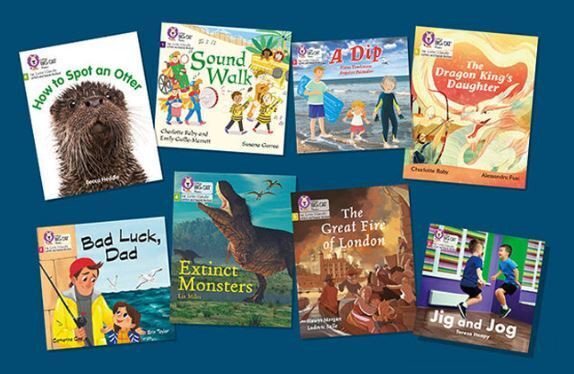
Our reading scheme is supported by Big Cat Phonics for Little Wandle Letters and Sounds Revised, with books that are carefully aligned to the programme’s progression. These books cover all phases of phonics learning and include an engaging mix of fiction and non-fiction, fostering a love for reading in every child.
Little Wandle Reading Sessions
In Reception and Year 1, your child will participate in small group reading sessions three times a week, each lasting 20 minutes. These sessions focus on developing key reading skills, including decoding, prosody (reading with expression), and comprehension. After reading the book in school for a week, your child will bring the book they’ve been reading home to practice and reinforce their learning. In Year 2, children will continue working in small groups until they have completed the Little Wandle programme of books.
Supporting your child with reading in Key Stage 1
Although your child will be taught to read at school, you can have a huge impact on their reading journey by continuing their practice at home.
There are two types of reading book that your child may bring home:
Reading practice book
This book has been carefully matched to your child’s current reading level. If your child is reading it with little help, please don’t worry that it’s too easy – your child needs to develop fluency and confidence in reading.
Listen to them read the book. Remember to give them lots of praise – celebrate their success! If they can’t read a word, read it to them. After they have finished, talk about the book together.
Sharing book
In order to encourage your child to become a lifelong reader, it is important that they learn to read for pleasure. The sharing book is a book they have chosen for you to enjoy together.
Please remember that you shouldn’t expect your child to read this alone. Read it to or with them. Discuss the pictures, enjoy the story, predict what might happen next, use different voices for the characters, explore the facts in a non-fiction book. The main thing is that you have fun!
Pupils read often and have access to a wide range of books from our school library and reading areas in class. Our reading scheme provides a wide range of high quality reading books, which include poems, fiction and non-fiction texts.
Reading in Key Stage 2
We recognise that children need to access a broad, balanced curriculum which allows them to comprehend increasingly more complex texts. Reading comprehension is supported by practising strategies to uncover the meaning of texts but this only follows once children are reading sufficiently fluently. Reading comprehension requires knowledge of vocabulary, context, syntax and narrative structure and the capacity to read fluently.
Reading is taught daily as a whole class. There is a clear focus on both fluency and understanding, using age-appropriate texts that have been chosen using lexile levels and with a view to engage our children. It is taught 5 days a week, for a period of approximately 30 minutes.
In Years 3 and 4, the children will have three fluency sessions and two comprehension sessions a week. In Years 5 and 6, the children will have two fluency and three comprehension sessions per week.
If you would like to know more about our reading scheme, or how you can help at home, please call into school and speak to your child’s class teacher.
“Reading engagement and reading for pleasure lead to a range of social, personal, and intellectual outcomes. These include enjoyment, social and cultural capital, social interaction, knowledge, creativity, empathy, self-expression and understanding of self and others. They also lead to health and wellbeing outcomes such as mental health, physical health and relaxation.”
The impact of reading for pleasure and empowerment, The Reading Agency